Building Breakout Course
Six live sessions. We use Combinant® course materials, code examples, tests, and metrics to build a real product — a complete Breakout game — and compare design decisions as the product evolves.
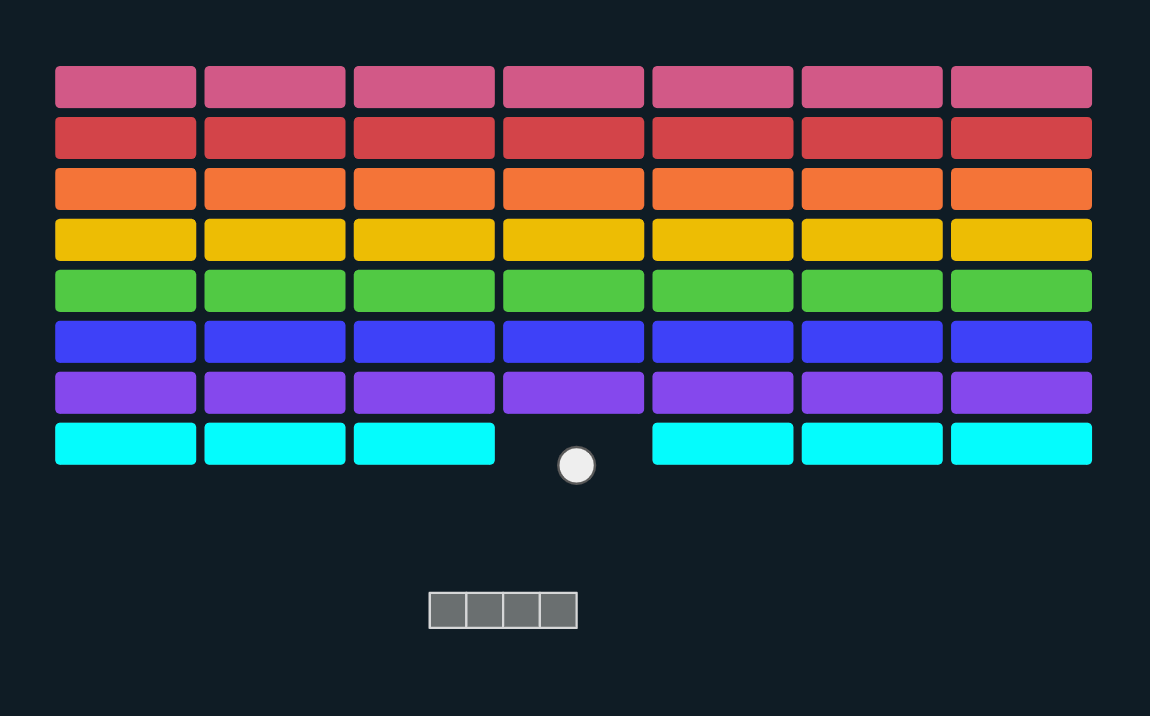
Six live sessions. We use Combinant® course materials, code examples, tests, and metrics to build a real product — a complete Breakout game — and compare design decisions as the product evolves.
Over six sessions, I show you how I build a complete Breakout game from scratch, step by step, decision by decision.
At every design turning point, we stop. We look at the problem together, discuss alternatives, and work through the solution on a shared board. You're part of the design process.
When a step is complete, we go into the code. We review the implementation, compare design alternatives, and measure effort, cost-of-change metrics, and software-development data.
By the end, we have the full picture in numbers.
You write software for a living and you've noticed something: similar problems do not always become easier the next time, no matter how many times you've solved similar problems before. Codebases grow, complexity accumulates, and speed does not automatically improve. This course shows a measurable way to study design decisions and cost-of-change behavior in a working software product.
You don't need deep Python knowledge. If you can read a function, a class and run a script, you're ready. The course concepts can be studied in many programming languages. Python is simply how we make it visible here.
You've seen three ways to design Breakout in The Breakout Game: Different Designs Compared — or maybe you haven't. Either way, this course shows another approach and measures it. Not in theory. Not on slides. You watch the design unfold, you participate in the decisions, and you see the numbers change session by session.
By the end, you’ll have seen a working product, design decisions, code examples, tests, and a metrics dashboard showing implementation effort and cost-of-change metrics across the course.
This is the course at the heart of Building Breakout — the first product in the Cost-of-Change Challenge. Three products, three different domains — all studied through Combinant® course materials, code examples, tests, and metrics to compare design decisions and cost-of-change behavior.
Next in the Challenge: → Building MiniVi → Building Trading Alerts
Prerequisites: None. We strongly recommend attending or watching The Breakout Game: Different Ways to Design It first, but it’s not required.
6 sessions · 3.5 hours each
SESSION 1: GETTING STARTED
We define the game, build the first working element, and make the ball move.
SESSION 2: THE BALL COLLIDES
The first interaction forces the first design decisions.
SESSION 3: THE PLAYING FIELD AND THE GAME
The main elements come together and the game starts to work.
SESSION 4: REVIEWING THE DESIGN
We stop. We look at what we built. We review structure, complexity, and cost-of-change metrics.
SESSION 5: ADDING IMPROVEMENTS
New features are added and measured. We compare implementation effort and cost-of-change metrics across changes.
SESSION 6: A NEW EXAMPLE AND THE FULL PICTURE
We study a related game example, review the metrics, and compare design decisions across sessions.
Francesco Cirillo. Creator of the Pomodoro® Technique. Senior software designer, Extreme Programming pioneer. Decades of software design led to one question: how do software teams make cost-of-change considerations visible and measurable?
Register — $299 Early adopter price
The complete final codebase. Public repository.
Track implementation effort, cost-of-change metrics, and software-development data.
The final product, the code, and the metrics dashboard. What did we learn from the data?